Accessibility & ADA Remodeling in Heritage Hill
Accessibility & ADA Remodeling for Heritage Hill homes - local housing, a clear process, and one call to get it started.
Homes here share more than a ZIP: they share builders, water and winters - and the bathroom findings all three produce.
Grand Rapids' housing makes this work concrete: ranches whose owners have lived in them for forty years, two-stories where the only full bath is up a flight of stairs, pre-war homes whose bathrooms predate the idea. The projects range from a weekend's grab-bar and comfort-height work to full first-floor bathroom additions.
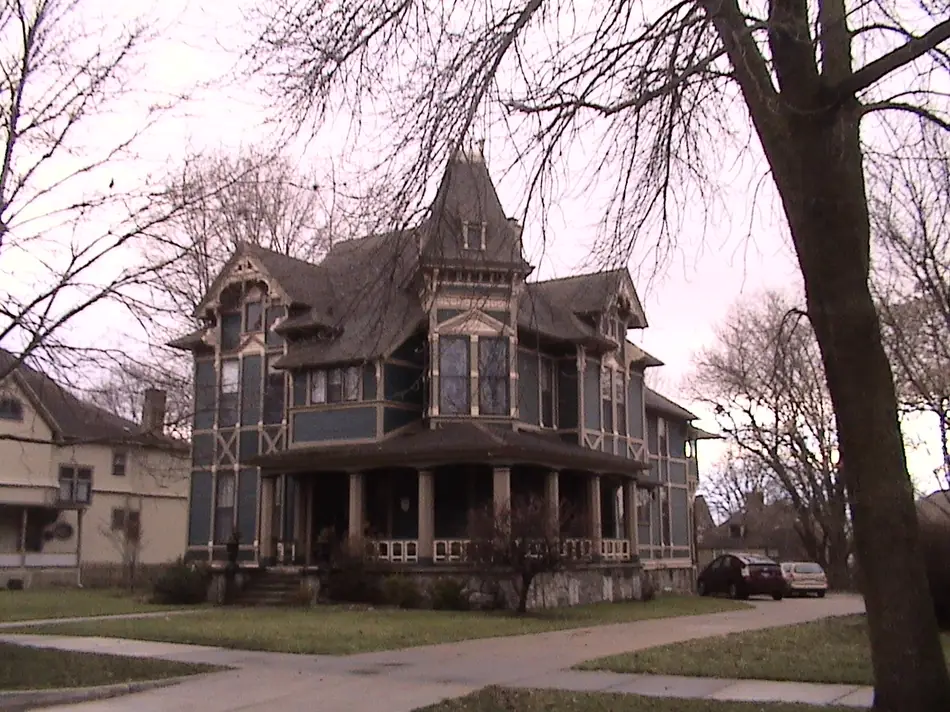
Heritage Hill, just east of downtown, is one of the largest urban historic districts in the country - hundreds of homes from the 1840s to the 1920s, including Frank Lloyd Wright's Meyer May House, on tree-lined streets that were once home to the city's furniture barons.
This part of the metro has its own version of the project. Large Victorian, Queen Anne, Colonial Revival and Prairie-style homes, mostly 1870s-1920s, many updated in stages over a century - and that shapes the bathroom work directly. Heritage Hill bathrooms are a remodel discipline of their own: clawfoot-era rooms, 1920s hex-tile baths added when indoor plumbing was new, and later baths tucked into former bedrooms and attic corners. For accessibility & ada remodeling in Heritage Hill, accessibility built into the walls is what lets this house keep its owner.
Humidity is the other half of the Michigan equation. Summers off Lake Michigan are humid, showers run daily, and a bathroom without real exhaust ventilation grows mold on grout, paint and drywall with quiet reliability. Michigan code expects mechanical ventilation in bathrooms for good reason - a fan sized to the room and vented outdoors, not into the attic, is part of every sound remodel here.
Permits are part of honest work in Michigan. Moving or adding plumbing, changing drains and most electrical work in a bathroom require permits under the state plumbing and electrical codes, with inspections before walls close. A remodel that skips permits to save a week usually costs the homeowner later - at resale, at insurance time, or at the first hidden leak.
Signs Heritage Hill Homes Need Accessibility & ADA Remodeling
A fall, or the fear of one
After a bathroom fall - or the first caught-yourself moment on the tub wall - the room's risk stops being theoretical, and the remodel conversation starts being urgent.
Coming home from surgery or rehab
A discharge date concentrates the mind: the bathroom must be survivable by a specific Tuesday.
A wheelchair or walker is in the picture
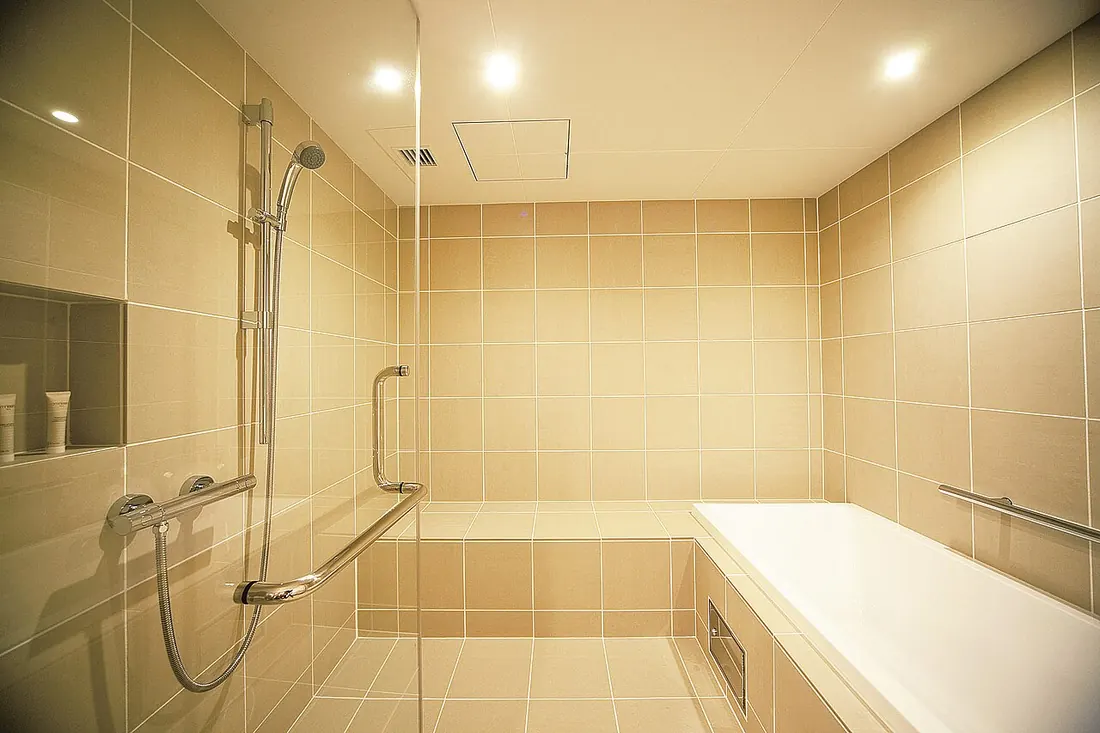
Door width, turning space, knee clearance at the sink and a roll-in shower are dimensional requirements - measurable, plannable, and unforgiving of guesswork.
Why This Project Runs in Heritage Hill
The mathematics of accessibility are unforgiving and liberating at once. A wheelchair's turning circle is a fixed geometry; a transfer needs clear floor space beside the toilet and tub; bars need blocking in the wall at exact heights to carry a falling body's full dynamic load. Every one of those numbers is checked with a tape during design - which is why accessible bathrooms, once built, feel calm: nothing is almost-right.
Heritage Hill bathrooms are a remodel discipline of their own: clawfoot-era rooms, 1920s hex-tile baths added when indoor plumbing was new, and later baths tucked into former bedrooms and attic corners. Cast-iron drain stacks, galvanized supply lines and floors that have settled for a hundred years are routine findings, and historic-district review can apply to exterior changes.
In Heritage Hill, that plays out street by street - and the in-wall blocking is what makes every bar a fact instead of a hope. The Heritage Hill file, in one line: know the floor, know the pipes, and the project list shortens itself.
Deep summer brings the humidity peak, and bathrooms without working exhaust fans start showing it: peeling paint above the shower, grout that never quite dries, a mirror that stays fogged for an hour. Summer is when ventilation upgrades pay for themselves in the homeowner's eyes - the difference is visible within a week of daily showers.
On the day, expect the visit to start with measurements and questions, not a catalog. The professional checks the floor's soundness, the water pressure, the drain's behavior and the venting, then talks scope - what the room needs, what it does not, and what each choice costs in time and disruption before any number is discussed.
Season by season, Heritage Hill keeps the same rhythm - projects planned in the quiet months get the best schedules and the calmest households.
Homeowners in Heritage Hill ask what they should do before the visit. The answer is access, not cleaning: clear under the sink, open the way to the basement plumbing, and know where the water shutoff is. The evidence should stay exactly where it is.
Two things decide how much a walkthrough accomplishes: access and honesty. Access means the professional can reach the plumbing - the basement ceiling, the access panel, the shutoffs. Honesty means the full history - the leak that 'went away', the DIY repair from five years ago, the room that has always smelled musty. With both, the first visit usually settles the scope for good.
Field note for the Heritage Hill route: the oldest housing carries the oldest plumbing, and the walkthrough starts there.

How Accessibility & ADA Remodeling Works in Heritage Hill
The full step-by-step process for this service - walkthrough, scope, build and handover - is laid out on the main Accessibility & ADA Remodeling page. In Heritage Hill the same sequence runs with the local map in hand: the housing around the Meyer May House and the Heritage Hill historic district, the plumbing era described above, and the findings this neighborhood actually carries.
The planning conversation also fixes the order of decisions. Structure and plumbing first, because they limit everything; waterproofing and tile second, because they take the calendar; fixtures and finishes last, because they are the only choices that can safely wait. Homeowners who decide in that order rarely un-decide anything at demolition prices.
The invisible materials matter most: the membrane behind the tile, the backer board that is not drywall, the sealant at the plane changes, the shutoff valves behind the wall's access panel. A scope that names these is a scope written by someone who expects to be judged in a decade, not at the photo session.
The freeze question deserves its standing place in every local scope: which supply lines run in exterior walls or unheated spaces, what happened in the coldest week of the last five years, and whether a shutoff-and-drain routine exists for the vulnerable runs. Answering it during a remodel - when walls are open - costs a fraction of answering it after a burst.
The Heritage Hill Angle
Start with the map of Heritage Hill: the streets around the Meyer May House and the Heritage Hill historic district set the daily pattern - the age of the homes, the water in their walls and the bathrooms a generation of owners have already remodeled once. The housing stock sets the inspection pattern. Large Victorian, Queen Anne, Colonial Revival and Prairie-style homes, mostly 1870s-1920s, many updated in stages over a century.
And the bathrooms themselves have a local accent. Heritage Hill bathrooms are a remodel discipline of their own: clawfoot-era rooms, 1920s hex-tile baths added when indoor plumbing was new, and later baths tucked into former bedrooms and attic corners. Cast-iron drain stacks, galvanized supply lines and floors that have settled for a hundred years are routine findings, and historic-district review can apply to exterior changes. That is why accessibility & ada remodeling in Heritage Hill is planned from a walkthrough rather than from a script - the visit reads this map before any scope is written.
Heritage Hill does not sit alone on the map. It shares housing eras and remodel cycles with Downtown Grand Rapids, Eastown and Midtown - the same builders, water systems and Michigan winters run through all of them, and the same bathroom findings repeat within the same few streets. The borders on the map are postal, not structural - the housing eras commute freely, so the planning has to think in neighborhoods, not addresses.
On the local map, Heritage Hill sits in the grand rapids neighborhood group, ZIP 49503 - close enough to Downtown Grand Rapids, Eastown that professionals work them on the same rounds. The neighborhood view is also the honest one: it is how housing eras actually distribute the work across Heritage Hill.
On paper Heritage Hill is ZIP 49503; on the ground it is the blocks around the Meyer May House and the Heritage Hill historic district, shading into Downtown Grand Rapids, Eastown, Midtown, East Grand Rapids, with the habits of a grand rapids neighborhood neighborhood - its own bathroom sizes, its own plumbing eras, its own repeat addresses. That is the level this work is planned at.
Street level, the Heritage Hill file reads like this: a grand rapids neighborhood part of the map in ZIP 49503, anchored by the Meyer May House and the Heritage Hill historic district, with Downtown Grand Rapids, Eastown, Midtown, East Grand Rapids close enough to share builders, eras and water systems. The work here is planned from that ground truth, not from a metro-wide average.
The details that decide outcomes in Heritage Hill are local ones: which side of the Meyer May House and the Heritage Hill historic district the call comes from, how the blocks toward Downtown Grand Rapids, Eastown, Midtown, East Grand Rapids were built, and what a grand rapids neighborhood street grid does to lot size, additions and below-grade bathrooms in ZIP 49503.
Prevention That Helps in Heritage Hill
An accessible bathroom's safety features are themselves maintained - bars, seats and drains checked like the equipment they are:
- Keep night lighting working; accessible design includes the 3 a.m. trip
- Replace worn non-slip strips and mats before they become the hazard
- Keep the curbless floor's drain clear - it is the room's flood insurance
Large Victorian, Queen Anne, Colonial Revival and Prairie-style homes, mostly 1870s-1920s, many updated in stages over a century.
Materials & Systems for Accessibility & ADA Remodeling in Heritage Hill
Grout is a material decision with a maintenance signature. Cement grout is honest, repairable and porous - it asks for sealing on schedule in wet zones and gives decades in return. Epoxy grout refuses stains and sealing alike, at a price that earns its keep in family showers and pale color schemes. The joint itself is planned too: tight rectified lines read modern, wider joints forgive handmade variation, and every corner is silicone, because buildings move.
The second depth is anticipation. Bodies change; a room designed only for today's abilities will be rebuilt at the worst moment. The assessment designs for the plausible decade - blocking everywhere it might be wanted, a shower format that accepts a seat and a chair, door widths that accept what has not arrived yet.
Countertop materials sort by household more than by taste. Quartz shrugs off toothpaste, dye and heat styling with no sealing calendar; natural stone returns the favor with pattern no factory repeats, at the price of a sealer habit; solid surface repairs its scratches in place. The honest spec names who cleans, how often, and with what - then chooses the surface that forgives that answer.
Timing & the Heritage Hill Calendar
Inspection rhythm is a scheduling fact in permitted work: rough inspection before walls close, final at the end, each booked into windows the household does not control. Projects that treat inspectors as appointments rather than obstacles keep their calendars; the paperwork is part of the build, carried from week one.
Summer is the metro's big remodel season. Warm weather means windows can open for dust control, exterior vent runs are easy, and families can time the dusty weeks around vacations. It is also when a household with one bathroom feels the project most - which is why summer projects here are planned with a temporary routine, a gym membership or a borrowed shower in mind.
On the Ground in Heritage Hill
A bathroom project has a sound, and it changes by phase. Demolition is percussion. Rough work is quieter - drills, the occasional saw, long stretches of measuring that look like nothing and decide everything. Tile is the quietest phase of all: the scrape of a trowel, the tap of a level, a radio low in the corner. Then the room goes silent in a different way during the cure windows, when nobody is working and the most important thing happening is time passing over a membrane. Owners sometimes read those quiet days as stalls; they are the opposite - they are the project keeping its promises on schedule, in the only currency waterproofing accepts.
Choose accessibility work in the order risk dictates: falls first, access second, convenience third. And choose it early rather than urgently where you can - the same work costs less and decides better when it is not being scoped against a discharge date.
Neighbors notice a remodel before they notice its result: the dumpster, the vans, the Saturday saw. In the metro's close-set neighborhoods the etiquette is part of the craft - reasonable hours, a tidy street, deliveries that do not camp in the shared drive. It costs nothing and buys the only advertising that has ever worked in this business, which is a street that watched a project behave well and remembered whose sign was on the lawn.
Keep Exploring
Accessibility & ADA Remodeling nearby:
- Accessibility & ADA Remodeling in Downtown Grand Rapids
- Accessibility & ADA Remodeling in Eastown
- Accessibility & ADA Remodeling in Midtown
- Accessibility & ADA Remodeling in East Grand Rapids
More services in Heritage Hill:
- Vanity & Countertop Installation in Heritage Hill
- Shower Remodel in Heritage Hill
- Bathroom Flooring in Heritage Hill
- Walk-In Tub Installation in Heritage Hill
See the full bathroom remodeling page for Heritage Hill and the Accessibility & ADA Remodeling overview for Grand Rapids.
Accessibility & ADA Remodeling in Heritage Hill - Questions
How much does blocking matter for grab bars in Heritage Hill?
Entirely. A bar is only as strong as what it is anchored to; blocking installed while walls are open is the professional standard. Surface anchors into tile alone are the failure this page exists to prevent.
Does ADA apply to my Heritage Hill home's bathroom?
Not legally - the ADA covers public and commercial spaces. What the remodel borrows is the ADA's tested dimensions for clearances, heights and reaches, applied to your household's bodies and equipment. The result is usually described as accessible or universal design.
What should Heritage Hill homeowners have ready before a Accessibility & ADA Remodeling walkthrough?
Access and information. Clear the way under the sink, to the tub edge and to the plumbing below the bathroom, and have the pattern written down - when it started, where it concentrates, and what changed. That five minutes of prep is worth a second visit.
A Leaking Shower, a Dated Tub or a Bathroom That No Longer Fits Your Life?
One call connects you with a bathroom remodeling professional serving Grand Rapids and the surrounding West Michigan communities - a walkthrough, a clear scope and a written plan before any work begins.
📞 Call Now