Bathroom Ventilation and Mold: The Grand Rapids Guide
Most bathroom mold is a ventilation failure with a grout alibi - the fan must move rated air through a real duct to the outdoors, and many do neither.
Read the Guide
Porcelain is the wet-zone default: denser, less absorbent and frost-proof in ways standard ceramic is not - the distinction matters most on floors and in showers.
Problem: Porcelain is the wet-zone default: denser, less absorbent and frost-proof in ways standard ceramic is not - the distinction matters most on floors and in showers.
Solution: Choose the grout with the tile: cement grout maintained on schedule, epoxy where staining and standing water argue for it.
When to call: Call when tile is failing young - popped, cracked or staining through - because the failure is usually the substrate, and retile without diagnosis repeats it.
Tile is the bathroom's biggest visible decision and its most technical one. The same showroom wall holds tiles that will serve thirty years and tiles that will stain, craze or pop within five, and the difference is not price - it is body composition, water absorption, size discipline and the grout strategy chosen beside it. This guide sorts bathroom tile the way an installer thinks about it: by zone, by material science, and by what Michigan's humidity and winters do to the wrong choice.
Under the floors, the eras layer up: cast-iron drain stacks and galvanized supply in the older neighborhoods, copper and cast iron mid-century, PVC and PEX in the newer suburbs. Galvanized pipe narrows from the inside as it ages, which is why so many older Grand Rapids bathrooms have weak shower pressure that no new showerhead can fix - the pipe is the problem, not the fixture.
Winter remodels work fine in Grand Rapids as long as the plan respects the weather: materials acclimate indoors, exterior wall work includes insulation and air sealing, and nobody leaves a house unheated mid-project. The reward is real - winter is when schedules are shortest and when a household notices most how much a warm floor and a working fan improve the season.
Ceramic tile is clay fired at moderate temperatures - fine for walls, adequate for gentle floors, and absorbent enough to matter in wet service. Porcelain is denser clay fired hotter, absorbing under half a percent of water, which makes it the floor-and-shower default and genuinely frost-proof - the property that matters at entries, three-season baths and any tile near the Michigan outdoors. Through-body and glazed versions wear differently: glazed porcelain hides its wear layer in the surface, so chips in busy floors argue for color carried deeper.
Natural stone - marble, travertine, slate - trades discipline for character: it seals on a schedule, etches under acids, and varies tile to tile in ways that are either the point or the problem. In showers it is a commitment; on a powder-room floor it is a pleasure. The guide's rule: stone where you will maintain it gladly, porcelain where you will not think about it at all.
Large-format tile - 12 by 24 and up - minimizes grout lines and reads calm, but demands flat substrates; on an older Grand Rapids floor with any crown or dip, large tiles telegraph every unevenness as lippage. Small formats forgive: mosaics and small hexes conform to imperfect floors and multiply grout lines, which in a shower floor is a feature - grout is the grip. Subway tile remains the wall diplomat: cheap, classic, and endlessly re-patternable between stack, brick and herringbone.
Pattern is a budget line in disguise. Every diagonal, herringbone and border inlay buys labor; every size change buys cuts. Choose one flourish per room - the shower floor mosaic, the herringbone wall - and let field tile be field tile. Rooms with three flourishes read as samples, not designs.
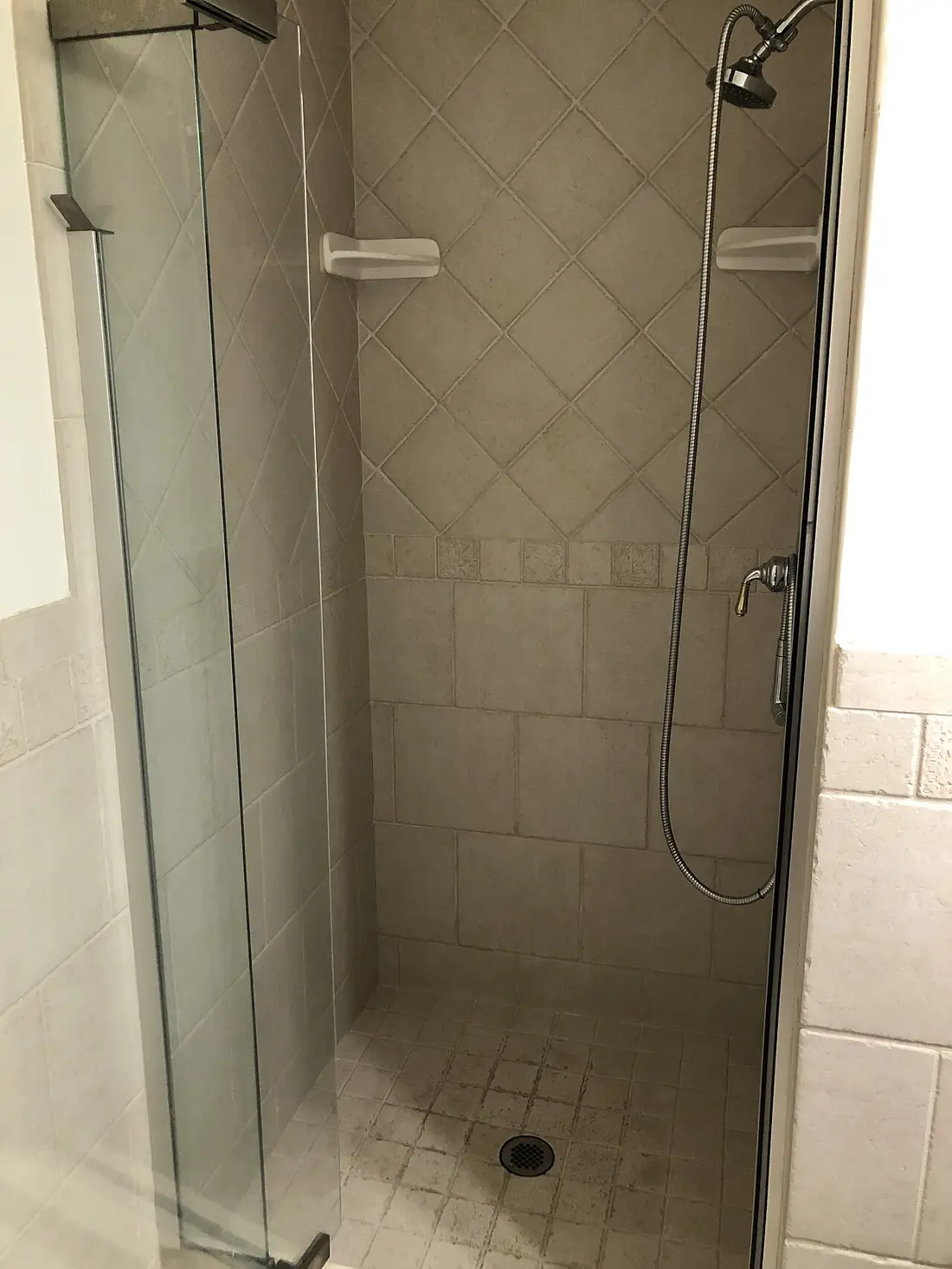

Wet floors want texture or small formats - the practical shorthand is a matte finish and, for shower floors, mosaic-scale pieces whose grout grid does the gripping. Polished anything on a bathroom floor is a decision to mop forever and fall eventually. Wear ratings matter where grit enters: entry-adjacent baths in a Michigan winter collect sand and salt, and soft glazes show it within seasons.
Wall tile lives easier - its enemies are water behind it, not feet on it - which is why the shower wall conversation belongs to waterproofing, not tile. Choose wall tile for looks and cleanability; choose floor tile like equipment.
Cement grout is porous, maintainable and honest: sealed on schedule in wet zones, it serves decades. Epoxy grout is the near-impervious upgrade - stain-resistant, no sealing, and priced like it knows it - earning its premium in shower floors, busy family baths and pale grout colors that would otherwise gray. Grout color is a design decision equal to the tile's: matched grout disappears into calm; contrasted grout draws the grid and shows every imperfection of line.
Joint width is the installer's tolerance made visible: rectified tile can run tight, handmade-look tile needs width to absorb its variation. And at every plane change - wall to floor, wall to wall - the joint is silicone, never grout, because buildings move and corners are where they say so.
Forest Hills is less a place on a sign than a school district - the large, wooded residential area east of Grand Rapids in Ada and Cascade townships, known for its schools and for streets of substantial homes under mature canopy along the Thornapple valley.
Mid-century ranches through large newer custom homes, on big wooded lots; many homes on well and septic.
Jenison is the Georgetown Township community just west of Grandville across the county line - a family suburb of 1960s-90s subdivisions, strong schools and streets that run down toward the Grand River's south bank.
Ranches, split-levels and two-story subdivisions, mostly 1960s-1990s, on family-sized lots.
Comstock Park is the unincorporated community just north of Grand Rapids where Mill Creek meets the Grand River - home to LMCU Ballpark and the West Michigan Whitecaps, an old mill village core, and the Dwight Lydell Park green along the creek.
Older village homes along Mill Creek plus post-war and newer subdivisions on the surrounding streets.
Tile depth is substrate depth. The tile itself is nearly immortal; everything under it is mortal - wood that swells, boards that flex, membranes that either exist or do not. The installer's real product is the assembly: stiffness, bond, waterproofing and movement accommodation, with the tile as its visible certificate.
Layout is the second depth: where cuts land, how pattern flows around corners, whether grout lines align across the floor-wall junction or honestly break. A room's tile is read at a glance for decades; the layout drawing that precedes it is an hour's work that a generation will look at.
Choose tile where permanence is the point - shower interiors, bathroom floors, the rooms you intend to finish once. Choose its system with it: the membrane, the substrate, the movement joints. Tile bought without its assembly is a photograph of a floor, not a floor.
That is the service side of this guide's subject. When you are ready, the Tile Installation page carries the process, the coverage by neighborhood and the number to call.
shower floor, bath floor, shower walls, vanity splash
Zones assigned and materials matched
Format checked against substrate flatness
Grout type and color decided with the tile
One flourish per room
Overage ordered; spare box stored
Tile pricing spreads on format and pattern more than on material: mosaics, herringbones and large-format-over-old-floors each carry labor, while the tile itself ranges widely by taste. The assessment that matters is the substrate's - flatness and soundness decide what the tile budget can honestly buy.
Bring a professional in when the floor is old or uneven, the shower is involved, or a previous tile job failed young - those are substrate diagnoses, and tile chosen before diagnosis is a guess wearing grout.
Polished tile on a wet floor
Large format over an unflattened old floor
Pale cement grout in a family shower
Grouting corners instead of siliconing them
Choose tile by zone, grout as its partner, and pattern with restraint, and the room will look inevitable - the good kind of designed, where every choice seems obvious in hindsight.
Most bathroom mold is a ventilation failure with a grout alibi - the fan must move rated air through a real duct to the outdoors, and many do neither.
Read the GuideA same-layout Grand Rapids bathroom remodel commonly runs three to five working weeks once materials are on site; layout changes and custom glass extend the tail.
Read the GuideFor floors and showers, its density and low absorption make it the safer default. On walls, ceramic's lighter weight and lower cost serve perfectly well. Better is a zone question, not a material ranking.
Large-format floors with matched grout, run to the walls without thresholds of pattern, plus shower walls carried to the ceiling. Fewer, calmer lines read as more room - the small-bathroom layout guide develops the full strategy.
If a wet bare foot slides during a showroom test with water from your bottle, believe it. Shower floors deserve mosaic-scale texture or purpose-made matte finishes; reserve polished surfaces for walls and dry powder rooms.
Twice: aesthetically, it decides whether the grid or the tile is the pattern; practically, pale cement grout in a shower is a maintenance subscription. Epoxy buys out of the subscription.
Sometimes - sound, well-bonded, properly prepared tile can accept an overlay in dry areas. In showers and over any suspect substrate, removal is the honest path; the waterproofing guide explains what lies beneath and why it decides.
One call connects you with a bathroom remodeling professional serving Grand Rapids and the surrounding West Michigan communities - a walkthrough, a clear scope and a written plan before any work begins.
📞 Call Now